Cleansol Silver Dip · Since 2002
Black tarnish off
in 15 seconds.
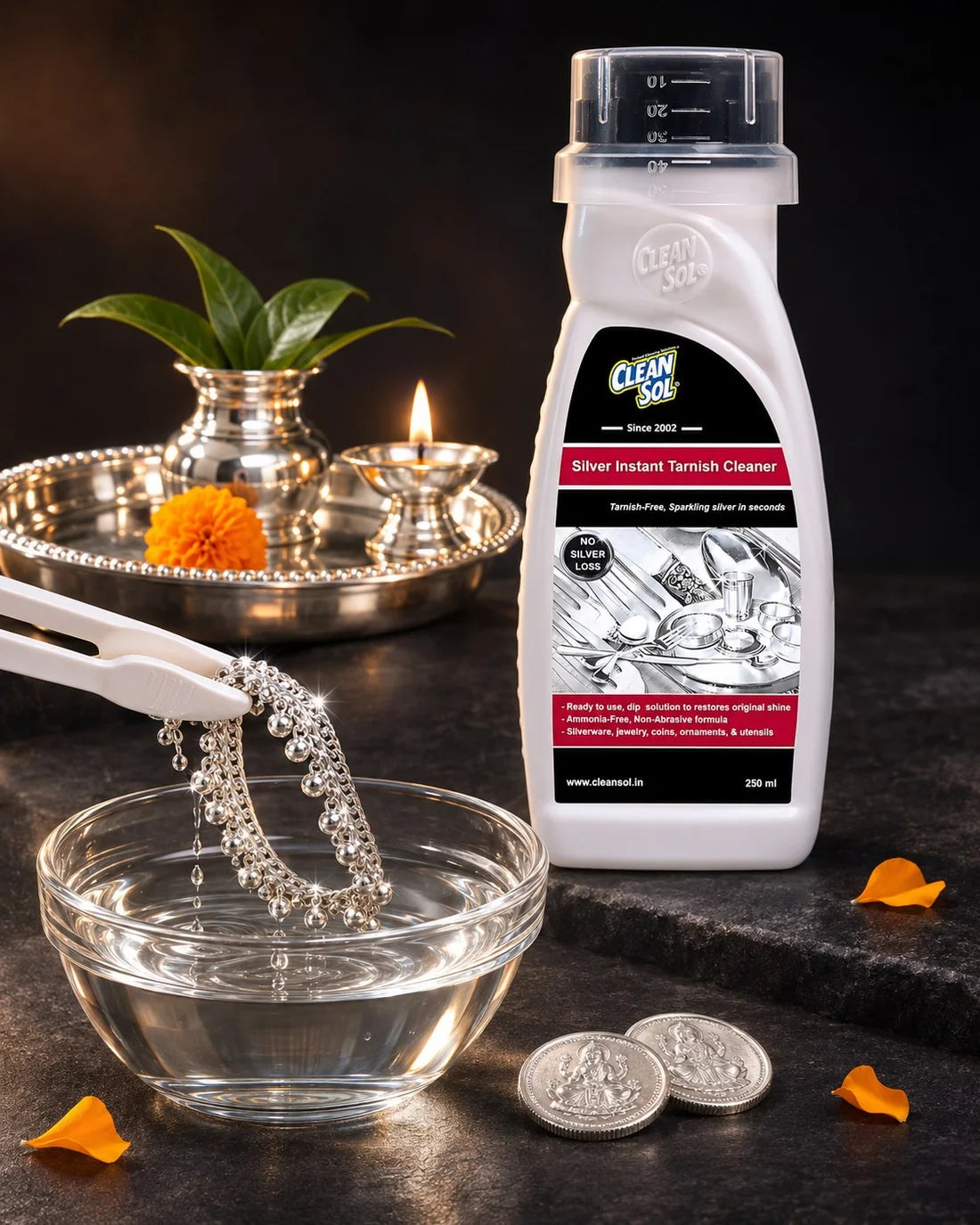
Dip, rinse, dry. No rubbing, no polishing paste. Brings back the mirror shine on payal, chains, pooja thali, diya and silver utensils – even inside links and carvings a cloth can't reach.
Real results
Same katori. 15 seconds apart.

Silver dip lifts the black tarnish layer without rubbing, so engraving and fine detail come back exactly as they were made – nothing is polished away.
No silver loss · Ammonia-free · Non-abrasive

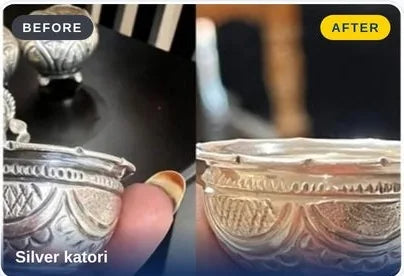

Customers' own photos – each item dipped 10–15 seconds, rinsed and dried.
See it work
Watch: tarnish off in seconds
Why silver turns black
It's only the surface – the silver underneath is fine
Silver reacts with sulphur in the air – from pollution, cooking gas, eggs, onions, rubber bands, wool and even sweat. This forms a thin layer called tarnish.
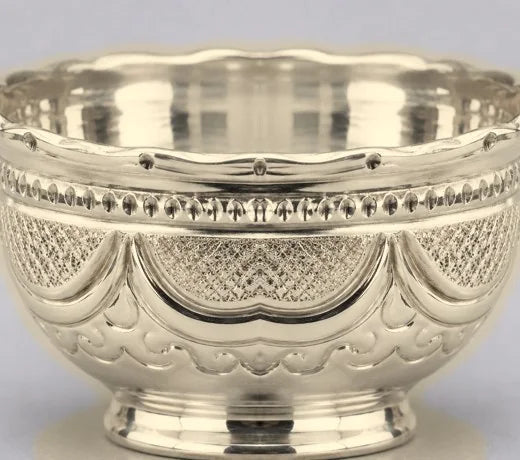
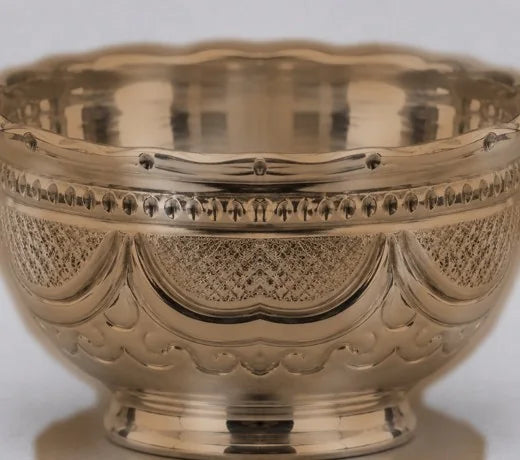
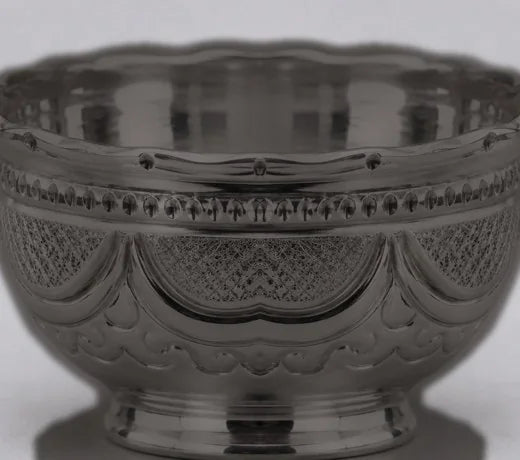
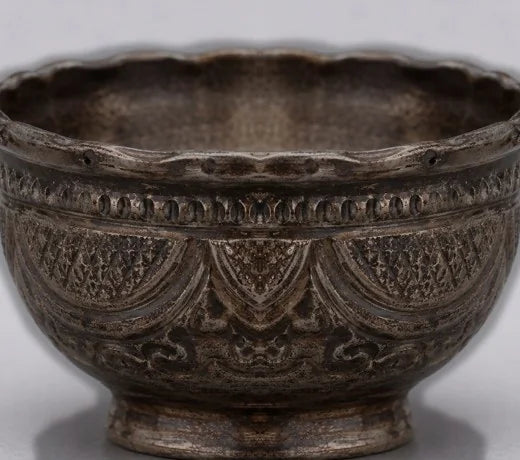
Silver dip works fastest on stages 1–3, and is especially useful where a cloth can't reach: chains, filigree (tarkashi), payal links, carvings and engraved pooja items.
Check first
Is it real silver? 4 quick checks
Real silver is stamped 999, 970, 925, 800 or "Sterling". India also has BIS hallmarking for silver with a HUID code.
EPNS / "silver plated" = thin coating. GS / "German silver" = no silver at all. "Stainless" or "18/8" = steel.
Silver is not magnetic. If a magnet sticks, it is steel or iron. (This test only rules items out.)
Real silver goes yellow → brown → black. Green or blue spots, peeling or copper showing through mean plating or base metal.
Not sure? Patch-test first: dip a small hidden part for 2–3 seconds, rinse and check. If it turns dull, patchy or a different colour, stop. Or WhatsApp a photo to 98290 05860 – we'll tell you.
Know your metal
Types of silver – and what looks like silver but isn't
 Dip ✓Pure silver (999)
Coins, bars, idols. Stamped 999 / 970.
 Dip ✓Sterling silver (925)
Payal, chains, rings, bichhiya. Stamped 925 / Sterling.
 Care ⚠Silver-plated (EPNS)
Thin silver over brass/copper. Quick dip only, never scrub.
 Care ⚠Rhodium-plated
Mirror-white, rarely tarnishes. Soap and water is usually enough.
 Don't dip ✗German silver
Copper, nickel & zinc – no silver. Yellow-green tarnish.
 Don't dip ✗Oxidised silver
Black design on purpose – dip would remove it. Cloth on raised parts.
 Don't dip ✗Imitation / silver-tone
Plated alloy, glued stones, no purity mark, turns skin green.
 Don't dip ✗Stainless steel
Magnet often sticks, never turns black. Use dishwash or steel cleaner.
Works where a cloth can't
What to dip, what needs care, what to keep away

- Pure (999) and sterling (925) silver
- Chains, payal, bichhiya, kada, rings
- Filigree (tarkashi) and carved silver
- Pooja thali, diya, kalash, katori, glass
- Silver utensils and cutlery
- Silver coins and bars (not collector coins)
- Silver set with diamonds or CZ
- Silver-plated (EPNS): quick dip only, never scrub
- Hollow items (ghungroo payal, hollow bangles, idols): use a cotton bud, don't immerse
- Rhodium-plated: soap and water is usually enough
- Gold-plated silver: dab only the silver parts
- Antique silver: ask an expert first
- German silver / nickel silver
- Imitation or "silver-tone" jewellery
- Oxidised (black-design) silver
- Bidri ware and niello work
- Stainless steel, aluminium, brass, copper
- Pearls, opal, turquoise, coral, emerald, amber
- Kundan, polki, meenakari; glue, lac or thread
Looks like silver, but isn't
How to spot it – and what to clean it with
| Item | What it really is | How to spot it | Clean it with |
|---|---|---|---|
| German silver | Copper, nickel & zinc – no silver | Marked GS / NS; yellow-green tarnish | Copper, Brass & Steel Cleaner |
| Silver-plated gifts | Thin silver over brass or copper | Marked EPNS; copper shows on worn edges | Soft cloth; quick dip only, with care |
| Imitation jewellery | Plated alloy, stones often glued | No purity mark; light; turns skin green | Dry soft cloth only |
| Oxidised silver | Deliberately blackened design | Black in the recesses by design | Soft cloth on raised parts |
| Stainless steel | Steel | Magnet often sticks; never turns black | Dishwash liquid or steel cleaner |
| Rhodium-plated | Bright white rhodium layer | Mirror-white; rarely tarnishes | Mild soap & lukewarm water |
How to use
6 simple steps
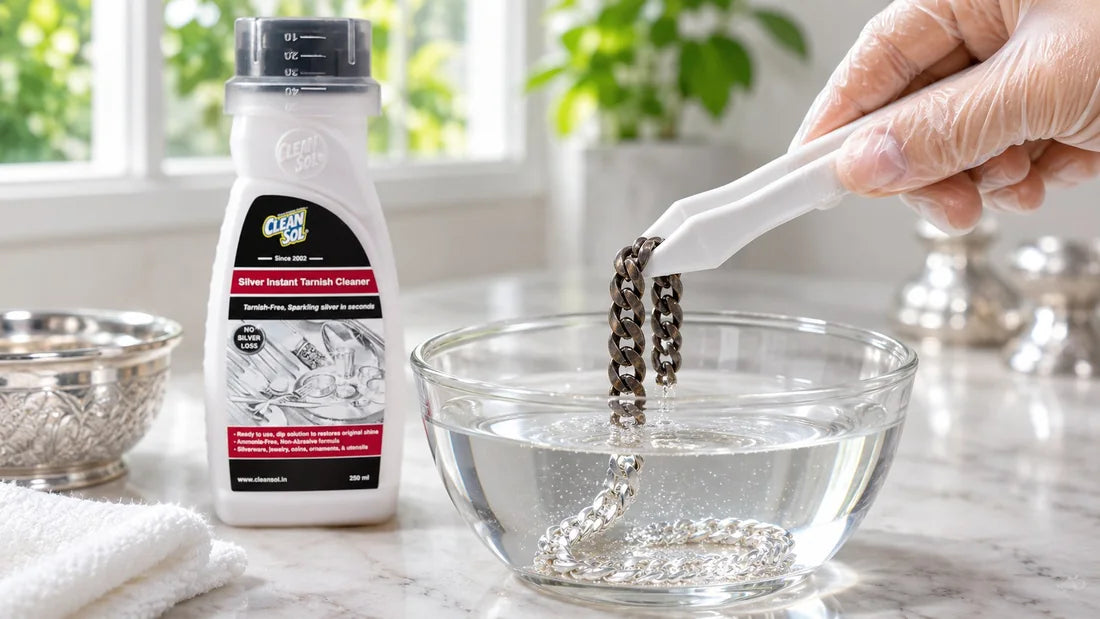
- 1PrepareWear gloves in a ventilated place. Item free of lacquer, oil or wax. Pour just enough to cover it into a glass or plastic bowl – not metal.
- 2Dip for 10–15 secondsHold with plastic tongs or a plastic tea strainer. Swirl gently.
- 3Repeat only if neededA few more seconds for heavy tarnish – never more than 40 seconds in total.
- 4Rinse immediatelyUnder running water for at least 30 seconds, inside chains and links too. The most important step.
- 5Wash with mild soapLukewarm water, rinse again – especially pooja items and utensils for food or prasad.
- 6Dry and buffSoft cotton or microfibre cloth for a mirror shine.
- Check the item is real silver
- Wear gloves; keep the room ventilated
- Use a glass or plastic bowl and plastic tongs
- Dip for seconds, not minutes
- Rinse, wash with mild soap, dry completely
- Close the bottle tightly after use
- Never mix with bleach or any other cleaner
- Don't leave silver soaking
- Don't dip German silver, imitation, oxidised or stone-studded jewellery
- Don't immerse hollow items or pieces with glue, lac or thread
- Don't use aluminium or steel bowls
- Don't pour used liquid back into the bottle
After cleaning
Keep silver bright for longer
Zip-lock pouches or airtight boxes. A piece of chalk inside absorbs moisture.
Jewellery worn regularly tarnishes less than jewellery kept in a drawer.
Put it on after perfume, hairspray and cream. Remove before swimming.
Rubber bands, rubber mats and woollen cloth speed up tarnish.

For every pooja & festival
The whole pooja set, shining in minutes
Thali, kalash, diya, bell and coins – dip each piece, rinse, wash with mild soap and it's ready for Diwali, weddings and daily pooja.
Get the 1 L festival packChoose your pack
From home to jeweller
 250 mlTry it · a few jewellery pieces
 500 mlMonthly care of jewellery & coins
 1 LDiwali, weddings, full pooja sets
 5 LJewellers, silversmiths, temples
10 LJewellers & caterers – regular use
Jeweller, silversmith or temple?
Factory price, regular supply
5 L to 50 L packs at factory price – GST invoice, pan-India delivery. Not sure if an item is real silver? Send us a photo.
FAQ
Questions, answered
How long should I dip silver?
10–15 seconds. Dip again briefly only if tarnish remains – never more than 40 seconds in total – then rinse straight away.
Will the dip damage my silver?
Used as directed – a quick dip, a thorough rinse and drying – it's made for everyday silver. Problems come from soaking too long, poor rinsing, or dipping items that aren't real silver.
Can I use it on German silver?
No – it contains no silver. Use Cleansol Copper, Brass & Steel Cleaner or mild soap instead.
Can I use it on silver-plated items?
Yes, with care – a quick dip only, because the silver coating is thin. Never scrub, and don't dip often.
Can I reuse the liquid?
For several items in one session. Never pour it back into the original bottle.
Why does my silver tarnish again quickly?
Usually it wasn't rinsed and dried well, or it's stored in open air. Rinse thoroughly, buff dry and store airtight.
Can I clean silver jewellery with stones?
Diamonds and CZ can take a quick dip. Keep pearls, opal, turquoise, coral, emerald, amber, kundan and polki away – use a cotton bud around them.
Should I dip old or collector coins?
Everyday and gift coins, yes. Collectors' and antique coins, no – cleaning can reduce their value.
Safety: Read the label before use. Wear gloves, avoid contact with eyes and skin, and use in a ventilated area. Not for consumption. Keep tightly closed in the original container, away from food and out of reach of children. Do not mix with other cleaning products.